Wednesday, December 23, 2015

Car Guide and Inspiration Audi TT - Generation 2 (2006-2015)-Cars Blogging

AUDI TT

A redesign in 2006 answered the criticisms that the previous model face, which was the somewhat lack of power. This one utilized Audi's TFSI technology enabling more power while retaining a fun to drive persona and the core values it was known for.

See the overview of this TT


OWNERSHIP DETAILS3.2 FSI Quattro2.0 TFSI Quattro
Years Available2006-20102006-2015
ENGINE SPECS
Engine3.2 DOHC 30V V62.0 DOHC 20V I4
Horsepower250hp @ 6,300rpm200hp @ 5,100-6,000rpm
Torque320Nm @ 2,500-3,000rpm280Nm @ 1,800-5,000rpm
Fuel TypeGasoline/95 OctaneGasoline/95 Octane
Fuel SystemDirect InjectionDirect Injection
Transmission6-Speed Automatic6-Speed S Tronic
Fuel Tank Capacity
DIMENSIONS
Length4,178mm4,178mm
Width1,842mm1,842mm
Height1,352mm1,352mm
Wheelbase2,468mm2,468mm
Curb Weight1,430kg1,260kg
Body Style2 Door Coupe2 Door Coupe
Engine/Drive TypeFront Engine/All Wheel DriveFront Engine/All Wheel Drive
Seating2+22+2
SUSPENSION & TIRES
Front SuspensionMcPherson StrutMcPherson Strut
Rear Suspension4-Link4-Link
Front BrakesVentilated DiscVentilated Disc
Rear BrakesSolid DiscVentilated Disc
Tires255/35 R19255/35 R19
Wheels19 Inch Alloy19 Inch Alloy
SAFETY
Airbags66
Anti-Lock BrakesYes, With Electronic Brakeforce Distribution and Brake AssistYes, With Electronic Brakeforce Distribution and Brake Assist
Traction/Stability ControlYes, Electronic Stability Program and EDLYes, Electronic Stability Program and EDL
Other Safety FeaturesAdds: NoneFront and Rear Proximity Sensors
EXTERIOR
Fog LampsFront and RearFront and Rear
Other Exterior FeaturesAdds: Sun RoofAutomatic Active Headlamps, Headlamp Washers, Rain Sensing Wipers, Side Mirror Signal Repeaters
INTERIOR
Steering Wheel AdjustmentTilt/TelescopicTilt/Telescopic
Steering Wheel MaterialLeatherLeather
Seating AdjustmentPower, Driver and Front PassengerPower, Driver and Front Passenger
Seating MaterialLeatherLeather
Other Interior FeaturesAdds: NoneAluminum Accents, 50/50 Fold Rear Seat, Rear Cargo Cover
CONVENIENCE FEATURES
Power AmenitiesSteering (Electric), Windows, Door Locks, MirrorsSteering (Electric), Windows, Door Locks, Mirrors
Climate ControlAutomatic, DualAutomatic, Dual
Audio SystemAM/FM/6 CD/MP3/AUXAM/FM/6 CD/MP3/AUX
Speakers1212
Steering Wheel ControlsYes, AudioYes, Audio
AlarmYesYes
Keyless EntryYesYes
NOTES
RIVALS

Car Guide and Inspiration Audi Q7 - Generation 1 (2006-2015)-Cars Blogging

AUDI Q7

Audi's first attempt at the SUV market shares a platform with the Porsche Cayenne and Volkswagen Touareg plus sits as the largest of the three. It can accommodate seven people inside but the engines are used between its corporate cousins.


OWNERSHIP DETAILS4.2 Quattro3.0 Quattro/S Line
Years Available2006-20102006-2015
ENGINE SPECS
Engine4.2 DOHC 40V V83.0 DOHC 24V V6
Horsepower350hp @ 6,800rpm233hp @ 4,400rpm
Torque440Nm @ 3,500rpm500Nm @ 1,750-2,750rpm
Fuel TypeGasoline/95 OctaneDiesel
Fuel SystemElectronic Fuel InjectionCommon Rail Direct Injection
Transmission6-Speed Automatic6-Speed Automatic
Fuel Tank Capacity
DIMENSIONS
Length5,086mm5,086mm
Width1,983mm1,983mm
Height1,737mm1,737mm
Wheelbase3,002mm3,002mm
Curb Weight2,270kg2,245kg
Body Style4 Door SUV4 Door SUV
Engine/Drive TypeFront Engine/All Wheel DriveFront Engine/All Wheel Drive
Seating88
SUSPENSION & TIRES
Front SuspensionDouble Wishbone with Air SuspensionDouble Wishbone with Air Suspension
Rear SuspensionDouble Wishbone with Air SuspensionDouble Wishbone with Air Suspension
Front BrakesVentilated DiscVentilated Disc
Rear BrakesVentilated DiscVentilated Disc
Tires275/45 R20235/60 R18 or 275/45 R20 (S-Line)
Wheels20 Inch Alloy18 or 20 (S-Line) Inch Alloy
SAFETY
Airbags88
Anti-Lock BrakesYes, With Electronic Brakeforce Distribution and Brake AssistYes, With Electronic Brakeforce Distribution and Brake Assist
Traction/Stability ControlYes, Electronic Stability Program and ASRYes, Electronic Stability Program and ASR
Other Safety FeaturesAdds: NoneHill Hold Assist, Hill Descent Control, Front and Rear Proximity Sensors
EXTERIOR
Fog LampsFront and RearFront and Rear
Other Exterior FeaturesAdds: NoneAutomatic Headlamps, Headlamp Washers, Side Mirror Signal Repeaters, Roof Rails, Rear Wiper. S-Line Adds: Revised Front and Rear Bumpers, Side Skirts
INTERIOR
Steering Wheel AdjustmentTilt/TelescopicTilt/Telescopic
Steering Wheel MaterialLeatherLeather
Seating AdjustmentPower, Driver and Front PassengerPower, Driver and Front Passenger
Seating MaterialLeather/AlcantaraLeather or Leather/Alcantara (S-Line)
Other Interior FeaturesAdds: NoneAluminum Accents, 40/20/40 Fold Second Row, 50/50 Fold Third Row, Rear Cargo Cover with Net. S-Line Adds: Aluminum Scuff Plates
CONVENIENCE FEATURES
Power AmenitiesSteering, Windows, Door Locks, Mirrors with Heat and Fold, TailgateSteering, Windows, Door Locks, Mirrors with Heat and Fold, Tailgate
Climate ControlAutomatic, Four ZoneAutomatic, Four Zone
Audio SystemAM/FM/6 CD/MP3/AUXAM/FM/6 CD/MP3/AUX
Speakers1212
Steering Wheel ControlsYes, Audio and CruiseYes, Audio and Cruise
AlarmYesYes
Keyless EntryYesYes
NOTESS-Line option added in November 2009.
RIVALSMercedes Benz GL Class

Monday, December 21, 2015

Car Guide and Inspiration Car Profiles - Audi Q7-Cars Blogging

AUDI Q7

With the current model nearing 10 years old, it is now ripe to have a second generation model. It may look the same but the formulas are kept unchanged. 3.0 engine now makes 600Nm of torque, powerful enough to make a presence.

The Good:
The Bad:

Price Range: P6,690,000-P7,380,000
Our Rating:

Last Update: December 21, 2015

OWNERSHIP DETAILSQ7 S-LineQ7
PriceP7,380,000P6,690,000
Warranty2 Years or 50,000kms2 Years or 50,000kms
ENGINE SPECS
Engine3.0 24V I63.0 24V I6
Horsepower272hp272hp
Torque600Nm600Nm
Fuel TypeDieselDiesel
Fuel SystemCommon Rail Direct InjectionCommon Rail Direct Injection
Transmission8-Speed Automatic8-Speed Automatic
Fuel Tank Capacity
DIMENSIONS
Length5,072mm5,072mm
Width2,029mm2,029mm
Height1,712mm1,712mm
Wheelbase2,620mm2,620mm
Curb Weight
Body Style5 Door SUV5 Door SUV
Engine/Drive TypeFront Engine/Four Wheel DriveFront Engine/Four Wheel Drive
Seating77
SUSPENSION & TIRES
Front Suspension
Rear Suspension
Front BrakesDiscDisc
Rear BrakesDiscDisc
TiresR21R19
Wheels21 Inch Alloy19 Inch Alloy
SAFETY
Airbags66
Anti-Lock BrakesYesYes
Traction/Stability ControlYes, Electronic Stability ProgramYes, Electronic Stability Control System
Other Safety FeaturesAdds: NoneHill Start Assist, Flat Tire Indicator, Anti Theft Wheel Bolts, Parking Aid Plus, Rear View Camera
EXTERIOR
Fog LampsFrontFront
Other Exterior FeaturesAdds: LED Headlights, S-Line PackageBi-Xenon Headlamps, Daytime Running Lights, LED Taillights, Headlamp Washers, Adaptive Air Suspension, Roof Rails, Rear Wiper, Automatic Headlight Range Adjustment
INTERIOR
Steering Wheel AdjustmentTilt/TelescopicTilt/Telescopic
Steering Wheel MaterialLeatherLeather
Seating AdjustmentPower, Driver (with Memory) and Front PassengerPower, Driver (with Memory) and Front Passenger
Seating MaterialLeather/AlcantaraLeather
Other Interior FeaturesAdds: Front Seats with Heat and Massager FunctionAmbient Interior Lighting Package, Sports Front Seats, Interior Mirror with Anti-Glare, Electrically Retractable 8.3 High Resolution Color Display, Audi Virtual Cockpit 12.3 Inch Driver Information Display
CONVENIENCE FEATURES
Power AmenitiesSteering (Electric), Windows, Door Locks, Mirrors with Heat and Fold Plus Memory, Luggage Compartment Lid, Fold Third RowSteering (Electric), Windows, Door Locks, Mirrors with Heat and Fold Plus Memory, Luggage Compartment Lid, Fold Third Row
Climate ControlAutomatic, Four ZoneAutomatic, Four Zone
Audio SystemAM/FM/CD/MP3/AUX/USB/Bluetooth with MMI Navigation Plus, MMI Touch, and Audi Music InterfaceAM/FM/CD/MP3/AUX/USB/Bluetooth with MMI Navigation Plus, MMI Touch, and Audi Music Interface
Speakers
Steering Wheel ControlsYes, Audio, Cruise Control, and Paddle ShiftYes, Audio, Cruise Control, and Paddle Shift
AlarmYes, Anti TheftYes, Anti Theft
Keyless EntryYes, Push Button StartYes, Push Button Start
RIVALSLexus LX, Mercedes Benz GL Class

See previous generation models of the Q7:

Sunday, December 20, 2015

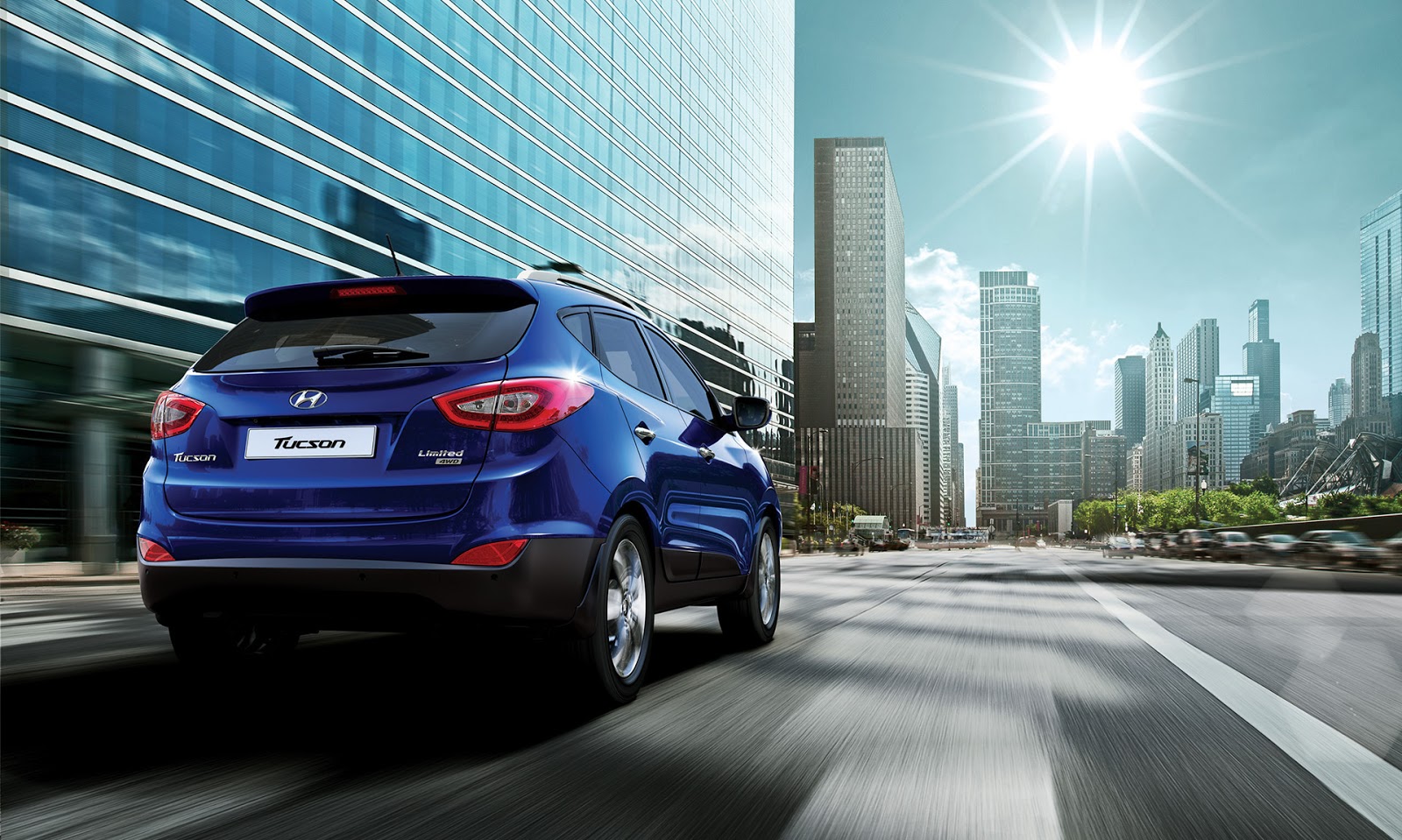
Car Guide and Inspiration Used Car Review - Hyundai Tucson (2010-2015)-Cars Blogging

Did this vehicle changed a brand forever? Let Hubben Delcatro delve more here.

2010-2015 Hyundai Tucson

History
There was a point in time Korean vehicles were considered inferior and third rate, much like Japanese cars during the early years. However, things had changed especially when these manufacturers invested heavily in quality improvement, design, manufacturing process, and long term research and had reaped the rewards. While these brands no longer offer a 10 year/100,000 mile (whichever comes first) warranty, these vehicles are on par with other competitors especially accolades and awards left and right are being given.

Quoting Toyota engineer Saeki Yoshikazu, who primarily developed the RAV4 who said "I test drove Tucson ix. Even I think Tucson ix is a very good vehicle. It is very stylish too." Developed under project LM, it took three years and 280 billion won for this vehicle to come to fruition. This vehicle is a recipient of Hyundai's fluidic sculpture design, which also saw usage in other Hyundais.

While the first generation Tucson sold well (due to low pricing and the availability of a diesel powerplant), the second generation brought Hyundai in a lot of factors to new heights. This vehicle saw a long waiting list and overtaken rivals in sales charts but saw the decline of service which owners had complained, the last one is better checked on Philippine automotive forums and you'll get what I mean. While other models in their stable experienced falling sales, this one stayed afloat. It was discontinued in the middle of the year and replaced by the third generation model. Numerous models were available throughout the years which were: basic GL, uplevel GLS, R for diesels, Premium as top end for early versions, and Limited (only few were brought in 2013, carrying amenities reserved for Premium models but carrying a 2.0 engine).

Value and Costs
With the launch of the third generation model, expect prices to plummet down further which means the cheapest unit you can find for a 2010 model would cost you P550,000 while recently purchased models in the P1,100,000 range. Scout for a 2011 and later purchased unit to utilize the five year warranty set by the distributor. There are a bevy of models available for each buyer's requirement, so do your research carefully.

Although the previous generation model is reliable, this doesn't mean the second generation model will. Common problems among second generation Tucsons involve the inhibitor switch, which viewing in the gauge area on where the transmission is slotted disappears and the thermistor coil in the air-conditioning unit in which the compressor is shut off the air-con does not turn on. Since the Tucson is a volume seller, parts are available in your suking Korean parts specialist shop.

Exterior and Interior
This is where Hyundai did their homework well, the exterior styling. Based from the Fluidic Sculpture in which the design was heavily inspired from nature, Bold styling that makes the car flawless in execution without going overboard is one feature that comes standard. A 2014 update gave the Tucson gunmetal wheels, rear LED tail lights, front daytime running lights, and some models have a revised grille later on. Limited and Premium models obtain a panoramic sunroof and larger wheels (the 2.4 4x4 model sold in 2010 to 2013 has this also) but was discontinued later on. GL gasoline units don't get side mirror signal repeaters, while others have it.

Going inside reveals an interior which is a mixed bag: build quality is top notch and design looked like it was designed professionally, some materials feel cheap which is a step back. Ergonomics inside is fine, though some front seat occupants may bang their knees at the dashboard. GLS models and above gain fabric/leather or leather seating, while GL gasoline units only have a driver's airbag as standard. Limited, Premium, and 2.4 GLS gets cruise control, push button start (latter does not have the two items, though), stability control, and hill brake control. 2014 and above models get a touchscreen monitor with DVD and GPS ready capability which is for GLS and GL diesel units only.

Engine
Three gasoline and a sole diesel engine were available for Filipino consumers back when the Tucson is available. First on the list is the Theta II 2.0 carrying 165hp at 6,200rpm and 197Nm at 4,600rpm which was standard for 2010 to 2013 models. An update in 2014 got an upgrade to the NU 2.0 that has 156hp at 6,200rpm and 192Nm at 4,600rpm, which seems odd as it got less but let's deal with it later. Another petrol powerplant offered is from the Theta II engine family which disposes 2.4 liters that comes with 176hp at 6,000rpm and 226Nm at 4,000rpm. Lastly, a diesel in the name of the R 2.0 which possess 174hp at 4,000rpm and 392Nm at 1,800-2,500rpm which is only paired with 4WD. Let us deal on how these perform: the Theta 2.0 gasoline is decent enough to carry the bulk of the body while the NU which replaced it is far better in terms of performance and fuel consumption. The 2.4 gasoline is fast but with just a few units available on sale, we wouldn't bother with this one. Getting the diesel will reward you with gobs of power and smooth acceleration at the expense of fuel consumption (only the 2.0 gasoline is less fuel friendly by some kilometer per liter). In detail, we would be choosing the 2.0 NU for all around purpose but our pick goes to the diesel, despite the standard 4WD and the difference in fuel consumption between the petrol is only small.

Driving Impressions
You are not going to buy this car to go on drag races, you better look elsewhere. The Tucson comes with electric power steering which makes steering on tight turns easy and increase fuel consumption though it acts somewhat numb in certain situations. Going to the driving experience: body roll is less pronounced but the suspension is choppy, making the ride experience a bit firm for some people. Another annoyance is the limited visibility of the vehicle, no thanks to a design which favored fuel consumption over practicality.

Verdict
Everyone knows the first generation Tucson is a dependable appliance, it sparkles at several aspects but known brands overshadow it. The second generation model upped the ante in a lot of factors but with some faults that come with it. We all know there is no perfect car, but the Tucson made Hyundai recognized more.

The Good:
  • Looks good
  • Improved engines
  • Fuel friendly than before
The Bad:
  • Poor rear visibility
  • Choppy ride
  • Some cheap touches
The Pick: It's the 2.0 diesel

THE SPECS
Engines: 1,998cc Theta II (2010-2013), 1,999cc NU (2014-2015), 2,359cc Theta II (2010-2013) I4 gasoline, 1,995cc R I4 diesel (2010-2015)
Power: 165hp @ 6,200rpm (2.0 gas, 2010-2013), 156hp @ 6,200rpm (2.0 gas, 2014-2015), 176hp @ 6,000rpm (2.4 gas), 174hp @ 4,000rpm (2.0 diesel)
Torque: 197Nm @ 4,600rpm (2.0 gas 2010-2013), 192Nm @ 4,600rpm (2.0 gas, 2014-2015), 226Nm @ 4,000rpm (2.4 gas), 392Nm @ 1,800-2,500rpm (2.0 diesel)
Fuel Consumption: 7-10km/L (city), 9-13km/L (highway) (*estimated and varies)
Transmission: 5-speed manual (GL gas, 2010-2013), 6-speed manual (GL gas, 2014-2015), 6-speed automatic
Suspension: Front McPherson strut, rear multi-link

MORE INFO
Price (New): P998.000-P1,700,000
Price (Now): P550,000-P1,100,000
Rivals: Chevrolet Captiva, Ford Escape, Honda CR-V, Kia Sportage, Mazda CX-5, Mazda CX-7, Mitsubishi ASX, Nissan X-Trail, Subaru Forester, Suzuki Grand Vitara, Toyota RAV4
On Sale: 2010-2015
Resources:

Contacts:
Hyundai E. Rodriguez - (02) 416-5767


Saturday, December 19, 2015

Car Guide and Inspiration Car Profiles - Chevrolet Suburban-Cars Blogging

CHEVROLET SUBURBAN

The 12th generation Suburban has a new skin (as opposed to the outdated Expedition) with a new engine is standard plus power folding seats for all rows comes standard. The plush life comes at a price, more than the Japanese has to offer.

The Good:
The Bad:

Price Range: P4,888,888-P5,888,888
Our Rating:

Last Update: December 19, 2015

OWNERSHIP DETAILS5.3 LTZ 4x45.3 LT 4x2
PriceP4,888,888P5,888,888
Warranty3 Years or 100,000 Kms3 Years or 100,000 Kms
ENGINE SPECS
EngineEcotec 5.3 V8Ecotec 5.3 V8
Horsepower355hp @ 5,600rpm355hp @ 5,600rpm
Torque516Nm @ 4,100rpm516Nm @ 4,100rpm
Fuel TypeGasoline/93 OctaneGasoline/93 Octane
Fuel SystemDirect Injection and Variable Valve Timing with Active Fuel ManagementDirect Injection and Variable Valve Timing with Active Fuel Management
Transmission6-Speed Automatic6-Speed Automatic
Fuel Tank Capacity117 Liters117 Liters
DIMENSIONS
Length5,690mm5,690mm
Width2,045mm2,045mm
Height1,890mm1,890mm
Wheelbase3,302mm3,302mm
Curb Weight2,516kg2,516kg
Body Style5 Door SUV5 Door SUV
Engine/Drive TypeFront Engine/Four Wheel Drive, All ModeFront Engine/Rear Wheel Drive
Seating78
SUSPENSION & TIRES
Front SuspensionCoil Spring- Magnetic Ride Control SystemCoil Spring - Premium Smooth Ride Package
Rear SuspensionCoil Spring- Magnetic Ride Control SystemCoil Spring - Premium Smooth Ride Package
Front BrakesDiscDisc
Rear BrakesDiscDisc
TiresP285/50 R20P285/50 R20
Wheels20 Inch Alloy20 Inch Alloy
SAFETY
Airbags66
Anti-Lock BrakesYes, With Brake AssistYes, With Brake Assist
Traction/Stability ControlYes, StabilitrakYes, Stabilitrak
Other Safety FeaturesAdds: Rear Cross Traffic Alert, Front Sensor, Side Blind Zone Alert with Lane Change AlertSpeed Sensing Door Locks, Rear Sensors, ISO-FIX Seats, Immobilizer, Forward Collision Alert Sensor, Lane Departure Warning, Automatic Occupant Sensing System, Rear Camera, Tire Pressure Monitor System
EXTERIOR
Fog LampsFrontNone
Other Exterior FeaturesAdds: Lighting Step Board, Skid Plate, Body Color Side MouldingRoof Rails, Rear Wiper, Rain Sensing Wipers, Step Board, Side Mirror Signal Repeaters
INTERIOR
Steering Wheel AdjustmentTilt/Telescopic with MemoryTilt/Telescopic
Steering Wheel MaterialLeatherLeather
Seating AdjustmentPower, Driver, Front Passenger, Second and Third Row SeatsPower, Driver and Front Passenger
Seating MaterialLeatherLeather
Other Interior FeaturesAdds: Cooling Seat Function, Push Button Start, Passive Door EntryInstrumental Panel, 5 Power Outlets, Wood Finish, Light Sensitive Rear View Mirror, 230V Electric, Heated Seats, Front Cooler, Universal Garage Door Opener, Driver Information Center with 4.2 Inch Diagonal Multifunction Display, Remote Starting System, Adaptive Cruise Control
CONVENIENCE FEATURES
Power AmenitiesSteering, Windows, Door Locks, Mirrors with Fold, Liftgate, Pedals, Step BoardSteering, Windows, Door Locks, Mirrors, Liftgate, Pedals
Climate ControlAutomatic, Triple ZoneAutomatic, Triple Zone
Audio SystemAM/FM/CD/MP3/AUX/USB/SD Card Reader with Entertainment System, 4 Sets of Headphones. BOSE Sound System, Chevrolet MyLink, Portable Charger, and Wireless Phone ChargingAM/FM/CD/MP3/AUX/USB/SD Card Reader with Entertainment System, 4 Sets of Headphones. BOSE Sound System, and Chevrolet MyLink
Speakers99
Steering Wheel ControlsYes, Audio, Cruise Control, and Driver Information DisplayYes, Audio, Cruise Control, and Driver Information Display
AlarmYes, with Anti TheftYes, with Anti Theft
Keyless EntryYesYes
RIVALSChevrolet Tahoe, Ford Expedition

See previous generation models of the Suburban

Sunday, December 13, 2015

Car Guide and Inspiration Used Car Review - Toyota Hilux (2005-2015)-Cars Blogging

One of the noted names in the pick-up race gets the review under Hubben Delcatro.

2005-2015 Toyota Hilux

History
The origins of the Hilux can be traced from the Toyota Stout/Hino Briska/Toyota Briska trucks, released during the early years of Toyota. These were simple, no-non sense trucks that can do the job done without any fuss. The Hilux was first launched in 1968, which was offered as an alternative to the pick-up truck versions of the Crown/Corona/Corona Mark II and replaced the Briska/Stout trucks, though the latter remained in production in some countries. The smallest engine is a 1.5 gasoline, with a 2.0 as the largest.

In 2004, the seventh generation Hilux saw its debut in almost all markets except North America, Japan, and Korea. While previous models shares its platform with the 4Runner SUV (which is now relegated with the Tacoma), it utilizes a revamped platform found on older models. The Hilux shares the platform also used by the Innova and Fortuner. As a general rule, a myriad models from the numerous body styles and engines are offered in each market it is sold in.

Launched as a 2005 model in December 2004, the Hilux saw numerous improvements which included new engines, improved interior, and also the top slot in the segment (which rivals snatched in several instances). Exterior updates were done in for model years 2009 and 2012 and a mechanical update for the 2.5 in August 2012. Available models include the J, E, G, and an FX body launched later on.

Value and Costs
With the launch of the eighth generation model, expect prices to drop in the used car market. For those interested in a pre-owned unit, do take note earlier units will set you back P560,000 while later ones with their warranty intact costs in the P1.1M range. Among pick-up trucks, this has the highest resale value when compared to other rivals of the same age.

Although the Hilux is known for its "indestructible" image, some 2005 to 2006 Hiluxes with the 2.5 engine (also a symptom with the same period Fortuner and Innova) have problems with the fuel drive in which it can get stuck that causes the engine to stop. This issue had been remedied in later models, by revising this flaw. Otherwise, this is one trouble-free truck especially that no other known problems persist.

Exterior and Interior
Stylish and macho, these are words that best describe the seventh generation Hilux. An imposing presence comes standard but does not look bulky at all. J and 2009 to 2015 E models have steelies as standard while G and early model E models ride on alloys. Do take note that October 2009 and later E units benefited from a height increase while G models have their rim sizes increase in October 2009 and in the 2011 update. There also exists a limited edition TRD model which boasts gun metal alloy wheels, and TRD bumpers and decals in 2014. Body cladding, roof rails, and bed liner were added for G models in March 2014. 3.0 G and those with VNT have a top mount intercooler as standard.

Going inside, the vast dashboard will pose a problem for some especially that reaching the climate control buttons, audio system, and the 4x4 shifter may be too far for some. Newer models get an improved interior in the form of larger buttons, a touchscreen monitor with DVD and Navigation (3.0 G only), a steering wheel derived from the Camry, and LED gauges. On the safety side, early G models only have a driver side airbag and ABS isn't an option yet; 2009 units, depending on the variant, get dual airbags and ABS brakes as standard.

Engine
Three engines (one of which was upgraded later on) exist during the Hilux's selling time. The first one is the 2KD-FTV 2.5 which carries 102hp at 3,600rpm and 200Nm at 1,400-3,400rpm powering most 2WD models but an upgrade in 2012 for E and G due to the addition of the variable nozzle turbocharger technology had power and torque figures raised to 142hp at 3,400rpm and 343Nm at 1,600-2,800rpm respectively. The one that powers the top end model is the 1KD-FTV 3.0 with 161hp at 3,400rpm and 343Nm at 1,400-3,200rpm. If there is one rare engine (and the one to skip), it would be the 2TR-FE derived from the Fortuner that possesses 160hp at 5,200rpm and 241Nm at 3,800rpm. The 2.5 with 102hp would do fine in flat roads and city driving but poses difficulty on mountain roads and when the vehicle is fully loaded regardless of people and/or cargo. If there is one engine to look for, it would be the 2.5 with 142hp as it is better in every aspect. Choosing the 3.0 gives you power at an early powerband but acceleration isn't neck-snapping compared to the same time era Nissan Navara or Ford Ranger. Lastly, the 2,7 is fast but fuel consumption is nothing to be proud of, no wonder it was dropped in the 2009 update.

Driving Impressions
Buckle down the driver's seat for a long drive and you will experience some uncomfortable driving position, due to a lack of thigh and lower back support. Passengers should expect a comfortable but bouncy ride, especially this is a workhorse truck and not a passenger car. In other news, handling is in the light side and braking would require long distances (an eternity, perhaps?). Good thing for those who will utilize the bed more often, it is cavernous.

Verdict
Redesigning the Hilux gave the vehicle an improved image while retaining its solidity it was known for. Although there are flaws which come as standard equipment, the Hilux is one truck which knows how to be rough in several times while being smooth in some.

The Good:
  • Balance between rough and smooth
  • Tough image
  • Wide range of models available
The Bad:
  • Braking
  • Uncomfortable seating position
  • Lack of safety kit for some early models
The Pick: 3.0 G

THE SPECS
Engines: 2,494cc 2KD-FTV and 2,982cc 1KD-FTV I4 diesel, 2,693cc 2TR-FE I4 gasoline
Power: 102hp @ 3,600rpm (2.5, non-VNT), 142hp @ 3,400rpm (2.5, VNT), 161hp at 3,400rpm (3.0), 160hp @ 5,200rpm (2.7)
Torque: 200Nm @ 1,400-3,400rpm (2.5, non-VNT), 343Nm @ 1,600-2,800rpm (2.5, VNT), 343Nm @ 1,400-3,200rpm (3.0), 241Nm @ 3,800rpm (2.7)
Fuel Consumption: 6-11km/L (city), 9-13km/L (highway) (*estimated and varies)
Transmission: 5-speed manual, 4-speed automatic
Suspension: Front double wishbone, rear leaf spring

MORE INFO
Price (New): P700,000-P1,500,000
Price (Now): P560,000-P1,100,000
Rivals: Chevrolet Colorado, Ford Ranger, Isuzu D-Max, Mazda BT-50, Mitsubishi Strada, Nissan Navara
On Sale: December 2004-2015
Resources:
http://www.toyotanation.com/forum/206-hilux-pickup-forum/

Contacts:
Toyota Makati - (02) 897-3333

Sunday, December 6, 2015

Car Guide and Inspiration Used Car Review - Nissan Urvan (1988-2015)-Cars Blogging

Hubben Delcatro checks out one of the longest running vehicles sold in the market.

1988-2015 Nissan Urvan

History
If there is one vehicle that cannot be beaten in its class, it would be the L300. First launched in 1987, rivals from Japan and Korea followed throughout selling life in the early 90s but the Kia Besta was the segment leader in the middle of the decade, dislodging the Japanese stalwart. Ever since, it haven't took the top slot and only one upgrade was done: a new grille and an upgraded audio system with CD player. In the case of the Urvan, it sold well later on where a time it became the segment leader.

First introduced in 1965, the Nissan Caravan/Homy/Urvan line of vehicles are available in a multitude of seating configurations and body variations that suit market requirements. While the Homy (a luxurious passenger version model) was replaced by the Elgrand, the other two names are still in use. In 2012, the E26 Urvan/Caravan replaced the previous models sold in Japan and has versions from Mitsubishi and Isuzu.

The Urvan was launched to the Philippine market in 1988 as a rival to the L300. Universal Motor Corporation brought in the Shuttle guise in 12 seats first with other models followed suit. Although earlier models were the E24 platform, the E25 chassis (sold as the Estate) had its introduction in 2002 and was first killed in 2014. All other models gave way to the NV350 Urvan in June 2015, which scored more modern amenities and engines.

Value and Costs
Older models (and possibly super high mileage ex-public utility vehicles) can be obtained for as low as P300,000 while later units which saw private usage and have their warranties remaining cost a million bucks. While there are numerous models out there, get something which isn't that has abused totally while repossessed Urvans are a hit or miss since some have high mileage.

Getting a model with the TD27 engine would reward you - not with stellar acceleration - but with easy maintenance especially there is no electronic computer box or common rail direct injection technologies present, which can have any mechanic fix plus parts are cheap. The Estate will also give you low cost of ownership especially the engine is water cooled plus no CRDi gadgetry here. Other than that, do check for the usual wear and tear items that are common among vehicles used for ferrying people.

Exterior and Interior
Nothing to write here as it is a van, this one does not inherit the boxy slabs of older models that affects acceleration. Unlike the newer competition, the Urvan uses glass in its headlights. On the other hand, some models have a different emblem and not the Nissan logo present. Escapade models can be distinguished by their two tone color body and a sticker, while the Estate can be had in single or two tone color motif and slightly different styling (it is basically the next generation of the previous one).

Inside, it is just your generic van interior: simple and fuss free. E24 models can be had in various seating configurations ranging from 12 to 21, an analogue odometer, no tachometer, and devoid of power amenities other than steering. The Estate boasts a revised interior which adds a dash of luxury and an option between a regular model that can accommodate 12 people or a CEO version (launched in the early 2000s) which featured swiveling seats at the back. Escapade and Estate models have fabric upholstery, while Shuttle and VX get vinyl seating material. There was an option for a headrest mounted DVD player and a Wi-Fi router socket in 2012 but were dropped later on.

Engine
For E24 models (Escapade, Shuttle, VX), the standard powerplant is a TD27 2.7 diesel with 84hp at 4,300rpm and 178Nm at 2,200rpm while the Estate utilizes a ZD30 3.0 diesel carrying 105hp at 3,800rpm and 213Nm at 2,000rpm. The 2.7 is no match compared to modern CRDi vans especially that acceleration is slow and you will need some timing skills on overtaking. Choosing the 3.0 will give you decent acceleration but it drinks a lot of diesel when you push it harder.

Driving Impressions
Let us go to the passenger point of view, the Urvan has a ride which may be firm but controllable. It automatically beats the current Hiace since it is not bouncy, which is an advantage especially if you are riding with people who have motion sickness and the elderly ones. When it comes to handling, well, this is a typical van so nothing to write here.

Verdict
Vans, unlike sedans and SUVs, have a long shelf life and serves a different purpose. The Urvan is no-nonsense vehicle which will shuttle you and 11 other people in ease without draining your wallet. Since a lot of these vans are in the used market, choose wisely.

The Good:
  • Cheap maintenance
  • Multitude of seating configurations
  • Plenty in the market
The Bad:
  • Not the fastest
  • Not that fancy for all
  • Not that feature packed (E24 models)
The Pick: Any well maintained unit

THE SPECS
Engines: 2,664cc TD27 and 2,953cc ZD30 I4 diesel
Power: 84hp @ 4,300rpm (2.7), 105hp @ 3,800rpm (3.0)
Torque: 178Nm @ 2,200rpm (2.7), 213Nm @ 2,000rpm (3.0)
Fuel Consumption: 7-10km/L (city), 11-14km/L (highway) (*estimated and varies)
Transmission: 5-speed manual
Suspension: Front double wishbone, rear rigid axle leaf springs

MORE INFO
Price (New): P900,000-P1,500,000 (covers models from 2000)
Price (Now): P300,000-P1,000,000
Rivals: Foton View, Golden Dragon Sapphire, Hyundai Grand Starex, Hyundai Grace, Kia Besta, Kia Pregio, Mazda E200, Mercedes Benz MB100, Mitsubishi L300, Toyota Hiace
On Sale: 1988-2015
Resources:

Contacts:
Nissan Mantrade - (02) 843-3316